Metal Stamping Supplier Matching for Custom Stamped Parts
One print, up to 3 stamping shops that run the right die type and press tonnage. Reply within 24 business hours.
Why buyers send stamping work here
It comes down to the match: shops that fit your part, from the first quote.
Matched by specialization
Your RFQ goes to up to 3 shops that regularly run parts like yours, picked for die type, material, thickness and annual volume. Not a general directory.
Professional suppliers
Shops in the network quote to your print, communicate clearly and keep you updated while your parts are made.
You deal with the shop
Quotes, terms and delivery are agreed between you and the shop. Free for buyers.
Which stamping process fits your part?
The die type decides your tooling bill, your lead time and your piece price. Tick what applies and you will see which process shops are likely to quote.
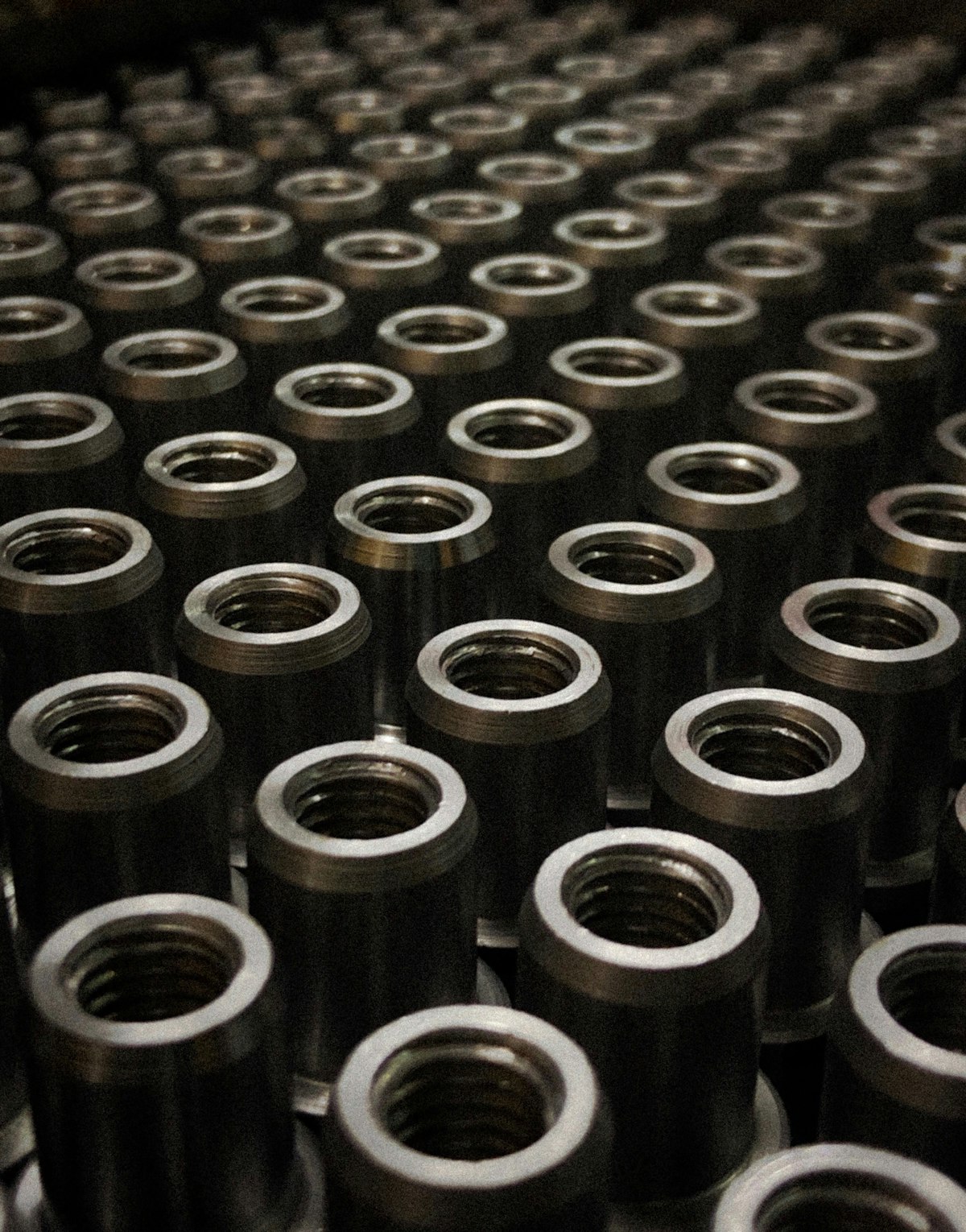
Parts buyers send us
- Brackets and mounting plates
- Shields and heat covers
- Electrical terminals
- Battery contacts
- Clips and retainers
- Deep drawn shells
- Enclosure panels
- Washers and spacers
If the part is still a sketch, send it anyway. Shops quote a tooling range from material, thickness, size and annual volume, then ask for the details that move the number.
Progressive, transfer, deep draw or fourslide
Typical ranges collected from how shops usually quote. They are not promises, and the shop that quotes you sets the real numbers for your part.
| Process | Typical part | Typical annual volume | Typical tooling | Typical lead time |
|---|---|---|---|---|
| Progressive die | Flat and formed parts with many features | 50,000 and up | $10k to $80k | 10 to 20 weeks for tooling |
| Transfer die | Bigger or deeper parts that leave the strip | 20,000 and up | $20k to $150k | 12 to 24 weeks for tooling |
| Deep draw | Cups, shells, cans and closed enclosures | 25,000 and up | $15k to $100k | 12 to 20 weeks for tooling |
| Fourslide or multislide | Clips, springs, terminals and wire forms | 100,000 and up | $3k to $20k | 6 to 12 weeks for tooling |
| Laser blank plus press brake | Prototypes and low volume brackets | Under 10,000 | Little or none | 1 to 4 weeks |
Materials and thickness
What changes when you switch material on a stamped part. Thickness ranges are what shops run most often, not machine limits.
| Material | What changes | Typical thickness |
|---|---|---|
| Cold rolled steel 1008 / 1010 | The default for brackets and covers. Formable and low cost. | 0.4 to 6 mm is common |
| HRPO and hot rolled steel | Heavier structural parts. The surface is rougher than cold rolled. | 1.5 to 8 mm is common |
| Stainless 301 / 304 | 301 work hardens and holds spring temper. 304 for corrosion and washdown parts. | 0.3 to 3 mm is common |
| Aluminum 5052 / 6061 | 5052 forms well. 6061 is stronger but cracks on tight bend radii. | 0.5 to 4 mm is common |
| Brass C260, phosphor bronze C510 | Terminals, contacts and springs where conductivity matters. | 0.1 to 2 mm is common |
| Spring steel 1074 / 1095 | Clips and retainers. Usually heat treated after forming. | 0.2 to 2 mm is common |
Flatness, hole position and burr side are the callouts that decide cost on most prints. Tolerance the features that matter and let the rest run to a general note.
Industries we match stamping work for
Each industry brings its own paperwork. Mention PPAP, material certs, lot traceability or finish specs in your RFQ so we match shops that already work that way.
Automotive
Brackets, shields, clips and seat hardware, usually with PPAP and IATF 16949.
Appliance
Panels, covers and internal brackets in coated steel and stainless.
Electrical contacts
Terminals, lead frames and busbar clips in brass, copper and bronze.
HVAC
Blower housings, drawn cups, mounting plates and dampers.
Electronics enclosures
Shield cans, chassis parts and EMI covers in thin steel and aluminum.
Medical non-implant
Instrument brackets and housings in 304 and 316 with lot traceability.
Lighting
Reflectors, housings and mounting hardware, often with a decorative finish.
Hardware
Washers, spacers, hinges and fasteners at high volume and low unit cost.
How it works
One RFQ from you. A short list of shops that fit. No bidding platform and no middleman on the order.
Send the print and the volume
A PDF, DXF or sketch plus material, thickness and annual volume. Takes about three minutes.
We match up to 3 shops
By die type, press tonnage, material range and the volumes each shop wants to run. You hear from us within 24 business hours.
Shops quote you directly
Each shop sends tooling and piece price to you. You compare, negotiate and order from the one you choose.
What drives the price of a stamped part
A stamping quote has two numbers: the die and the piece price. These six items decide both, and some of them you control on the print.
- Tooling type and stationsA ten station progressive die costs several times a single stage die. It is paid once, so the right die depends on your volume.
- Material and strip useMaterial is often most of the piece price. Nesting, strip width and carrier waste decide how much of the coil becomes part instead of scrap.
- Press time per hitStrokes per minute and how many parts come off each hit. A part that runs at 80 spm costs less per piece than one at 20 spm.
- Secondary operationsTapping, welding, deburr, plating, painting and assembly each add handling and often an outside vendor.
- Volume and release sizeAnnual volume spreads the die. Release size sets the setup cost per shipment. Four releases of 25,000 cost less than twenty releases of 5,000.
- Packaging and freightStamped parts are bulky. Returnable containers, separators and rust protection show up on the quote.
Have a print ready?
Send the short version now. We will ask for anything missing. If you prefer to give full details up front, use the full RFQ form.
Your files go only to the shops we match. Ask for an NDA and nothing is shared until it is signed.
Run presses? Get RFQs that fit your dies.
Shops see a preview of each request before paying for it and quote the buyer directly. We take no commission on the order.
Questions buyers ask
Something else? Email .
Is this service free for buyers?
Yes. Sending a print and receiving quotes costs you nothing. Stamping shops pay us for matched requests. Price, tooling terms and delivery are agreed between you and the shop.
Who sees my print?
Shops first see a preview with part type, material and thickness, annual volume, die type and region. It does not include your name, company or files. Your contact details and files go only to the shops we match, up to 3. If you ask for an NDA, we hold the files until it is signed.
Do you stamp parts yourselves?
No. We are a matching service, not a stamping plant. The shops that quote you own the presses and build or run the die, and you place the order with them.
Who owns the tooling?
That is set in your contract with the shop, not by us. Most buyers pay for the die and own it, while the shop keeps it in its press and maintains it. Ask every quote to state ownership, storage, maintenance and what happens if you move the die.
Can I get a quote without a finished design?
You can. Send what you have, plus material, thickness and annual volume. Shops will quote a tooling range and ask for the details that change the price. A flat pattern is not required.
What if my volume is low?
Below a few thousand pieces a year a hard die rarely pays off. Say so in the RFQ and we match shops that also run laser blanking with press brake forming, so you get an honest comparison instead of a die quote you do not need.
Guides for stamping buyers
- Cost
Section 232 Duty and Tooling Cost on Stamped Steel Parts
Since April 2026 Section 232 applies to full customs value. See how a die adds to the duty base on stamped steel parts and which annex lists the HTS codes at 50% or 25%.
- Materials
Stamping Steel Grades: CRS, HSLA and Spring Steel Compared
Compare stamping steel grades: cold rolled, HSLA and spring steel. See typical strength, formability, springback and tool wear, and how to choose for your part.
- Process
Stamping Press Tonnage: How Shops Size a Press for a Part
Learn the stamping press tonnage calculation shops use for blanking and piercing, with a worked example, shear strength values and the margins that matter.