Guides / Materials
Aluminum Stamping Alloys: Choosing Between 3003, 5052 and 6061 for Stamped Parts
October 18, 2026
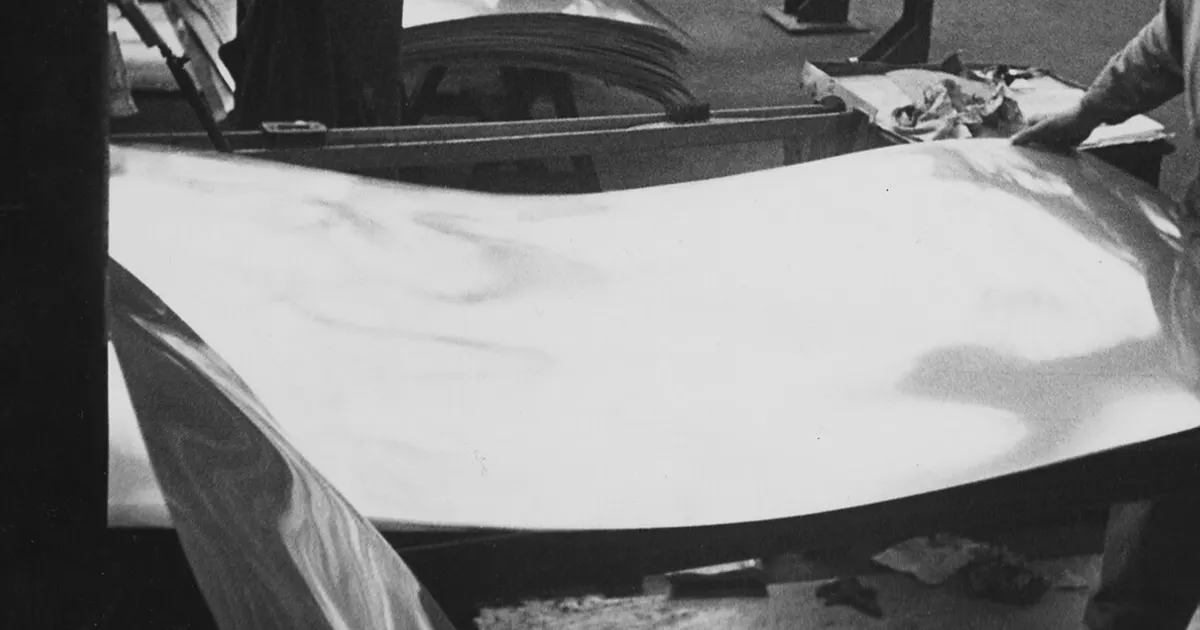
Aluminum is about a third the weight of steel, resists corrosion and conducts heat and electricity well, which makes it a common choice for housings, heat sinks, brackets and electronic parts. It also stamps differently from steel. It is softer, springs back more and sticks to tooling. The alloy and temper you pick decide whether a part forms cleanly, cracks at a bend or needs a heat treat after stamping.
Three alloys cover most stamped aluminum parts: 3003, 5052 and 6061. This guide compares them on strength, formability and finish, and explains the temper codes that appear on the print.
Reading the temper code
An alloy number alone is not enough, because the temper changes the properties. The common codes are:
- O. Annealed, the softest and most formable condition.
- H1x. Strain hardened by cold rolling. H14 is half hard.
- H3x. Strain hardened and then stabilized, which lowers strength slightly and improves formability. H32 is a quarter hard stabilized temper.
- T4. Solution heat treated and naturally aged, a moderate strength condition.
- T6. Solution heat treated and artificially aged, the strongest and least formable condition.
The H tempers belong to the non-heat-treatable alloys, 3003 and 5052. The T tempers belong to the heat-treatable alloys such as 6061. Always write both the alloy and the temper on the print.
Alloy 3003
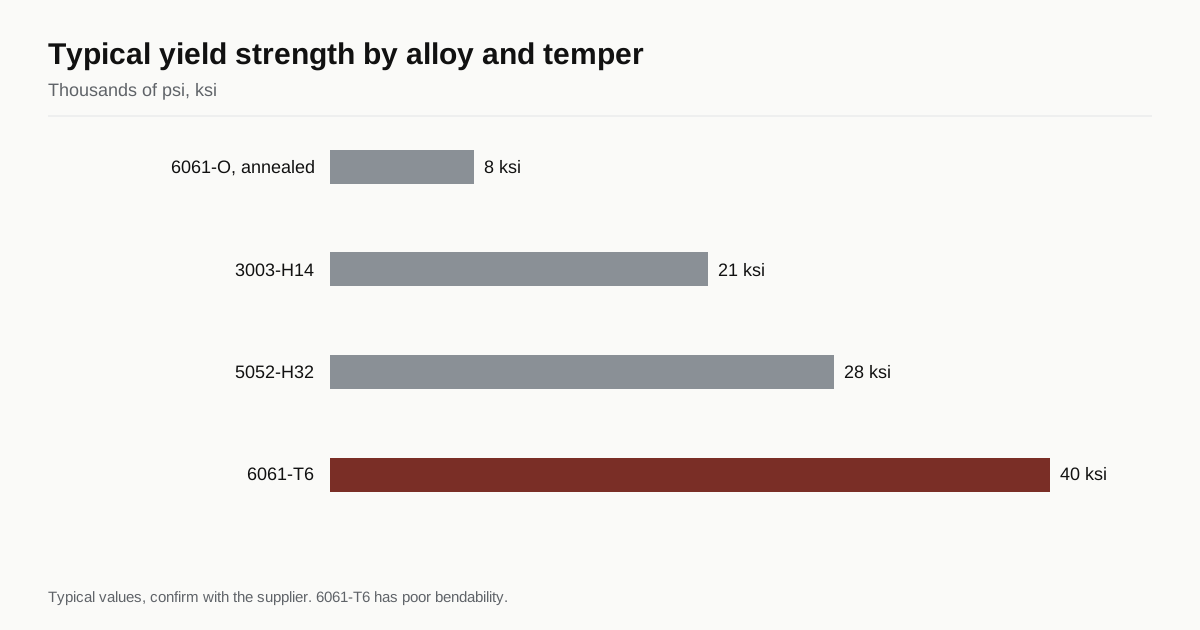
Alloy 3003 contains manganese and is a non-heat-treatable alloy with very good formability and moderate strength. In H14 temper, typical yield strength is about 21 ksi. It draws and bends easily, accepts tight radii and resists corrosion well.
Typical uses are drawn shells, cookware, light housings, fin stock and general bent parts where load is low. Because it is soft, 3003 dents and scratches, and the burr from a blanked edge can be tall and soft. It anodizes, though the finish is less uniform than on 5052 or 6061 because of its manganese content.
Alloy 5052
Alloy 5052 contains magnesium and is the most common general purpose sheet alloy. It is non-heat-treatable but stronger than 3003, with typical yield around 28 ksi in H32 temper. It keeps good formability, takes bends at moderate radii and resists corrosion, including in marine and humid conditions. Fatigue strength is good, which suits parts with vibration.
It is used for enclosures, brackets, panels, tanks, fuel parts and chassis components. For parts that need more strength than 3003 and good forming, 5052-H32 is the standard answer. It anodizes well and welds readily.
Alloy 6061
Alloy 6061 contains magnesium and silicon and is heat-treatable. In T6 temper, typical yield is around 40 ksi, which is far above 3003 and 5052. It is the common machined and extruded alloy, strong and corrosion resistant, and it anodizes with a clean finish.
Stamping is its weak point. In T6 it has low ductility, so bends crack along the bend line unless the radius is large, often several times the thickness. The two practical routes are:
- Stamp in a soft temper and age afterward. The shop forms the part in O or T4, then heat treats it to T6. This allows tighter bends but adds a heat treat step and distortion risk, since the part can move in the furnace and quench.
- Stamp in T6 with generous radii. Works for flat or lightly bent parts such as blanked plates, brackets with large radii and coined parts.
Because many buyers specify 6061 by habit, ask whether the part really needs T6 strength, or whether 5052 would do the job at lower cost. See metal stamping vs CNC machining vs laser cutting for where 6061 is more often cut than stamped.
The alloys compared
| Property | 3003-H14 | 5052-H32 | 6061-T6 |
|---|---|---|---|
| Typical yield strength | About 21 ksi | About 28 ksi | About 40 ksi |
| Formability | Excellent | Very good | Poor, good in O or T4 |
| Typical minimum bend radius, thin gauge | About 1 times thickness | About 1 to 2 times thickness | About 2 to 4 times thickness |
| Corrosion resistance | Very good | Excellent | Very good |
| Anodizing | Fair | Good | Good |
| Weldability | Good | Good | Good, with strength loss at the weld |
| Typical uses | Drawn shells, light brackets | Enclosures, panels, brackets | Plates, machined and heat treated parts |
These are typical values for thin sheet and strip, and the actual figures depend on thickness and supplier. The minimum bend radius is a guide, so ask the shop to confirm on your part.
How aluminum behaves in the die
Aluminum has quirks that a steel stamper adjusts for:
- Low cutting force. Shear strength is far lower than steel, so presses need less tonnage. See stamping press tonnage for typical shear values.
- Springback. Aluminum has a lower stiffness than steel, so for the same yield strength it springs back more. Dies overbend more, and angle control needs attention.
- Galling and pickup. Aluminum smears onto tool steel and builds up, which marks parts and wears tools. Polished or coated tools and lubricant help.
- Burr. Soft alloys form tall, ductile burrs. A burr limit tighter than steel work may need a secondary operation. See stamping burr height.
- Surface damage. Aluminum scratches easily, so protective film, clean dies and careful handling matter for visible parts.
Heat treating 6061 after forming
When a 6061 part is stamped soft and aged afterward, the heat treatment is a real process with its own risks. The part is heated to a solution temperature, roughly 530 degrees C (about 990 degrees F), held, then quenched in water or a water-based medium. It is then aged, typically for hours at about 160 to 175 degrees C, to reach T6 strength. Quenching is where parts distort. Thin or asymmetric parts can warp, so shops use fixtures, straighten parts after quenching or accept a wider flatness tolerance.
A second route skips the solution step and stamps in T4, which is naturally aged and more formable than T6, then ages the part to T6 with a lower temperature cycle. T4 keeps some of the forming ease and shortens the distortion risk, but forming should still happen soon after the supplier’s temper date because natural aging continues at room temperature. Ask the shop how it controls the time between solution treatment and forming. If you need documentation of the heat treat, name the specification on the print, and ask for a certificate of conformance with each lot. This is also a good place to ask whether the shop does heat treating in house or sends it out, since that changes lead time.
Cold work in the non-heat-treatable alloys
The 3003 and 5052 alloys cannot be heat treated for strength, but they gain strength from cold work. A bend or draw raises strength in the worked region. That is useful, but it also means the metal near a tight bend is stiffer and less ductile than the flat sheet. If the part is bent, flattened and bent again, it can crack at the second pass. Designers can avoid trouble by keeping to a single bend per line and by choosing generous radii. Annealed O temper aluminum of these alloys forms very easily and then hardens as it works, so some shops start with O temper for deep draws and accept lower final strength.
Surface appearance can change with forming too. In some 5xxx alloys in the soft condition, strain marks can appear on the surface when the metal yields unevenly. These marks are cosmetic but visible on anodized parts, and a shop can reduce them with the right temper and forming practice. If the surface is visible, mention it in the RFQ.
Coil, sheet and strip width
Aluminum is supplied as coil for progressive and transfer dies and as flat sheet for blanking presses and line dies. High volume parts run from coil, and the coil width and thickness tolerance affect feeding and burr. Sheet suits low volume or large parts. Ask whether the quoted price assumes coil or sheet, since material yield and handling differ. The same tolerance questions apply as for steel, covered in coil thickness and width tolerance.
Finishing after stamping
Aluminum parts are often finished after stamping:
- Anodizing builds a hard oxide layer and accepts dye. It reveals scratches and die marks, so surface quality before anodizing matters.
- Chromate conversion coating gives corrosion protection and electrical conductivity.
- Powder coat or paint adds color and protection.
- Brushing or polishing for appearance.
Match the alloy to the finish. 5052 and 6061 anodize more evenly than 3003. If cosmetic anodizing matters, tell the shop which faces are visible. The guide on secondary operations after stamping covers how finish steps change cost and lead time.
Cost and weight
Aluminum costs more per kilogram than steel, but it weighs about a third as much, so the cost per part depends on volume and thickness. Aluminum parts are often made thicker than steel parts to reach equal stiffness, which gives back some of the advantage. Material price moves with the metals market, so ask each shop how it handles price changes. Tooling for aluminum can cost less than for stainless, since cutting forces are lower, but polishing and coatings add to the bill.
What to put on the RFQ
- Alloy, temper and thickness, for example 5052-H32 at 1.5 mm
- Minimum bend radius and critical angles
- Finish requirement and visible faces
- Burr limit and direction
- Whether heat treatment after forming is acceptable
- Annual volume
- Whether the shop may propose an alternative alloy
The metal stamping RFQ checklist lists the other fields.
Checklist before you choose
- Start with 3003 for easy forms, 5052 for general parts and 6061 only when strength demands it.
- Write the alloy and temper together.
- Check bend radii against the temper.
- Plan the finish and mark visible faces.
- Set a burr limit.
- Ask whether stamping then heat treating 6061 is acceptable.
When the print is ready, send the RFQ and compare shop replies within 24 business hours.
See also: ASTM B209 aluminum sheet and plate for stamping.
Frequently asked questions
Which aluminum alloy is easiest to stamp?
3003 forms most easily, and it is often the choice for deep draws and shallow brackets where strength is not critical. 5052 is the next step up and the most common general sheet alloy. 6061 is the hardest to form in the strong T6 temper.
Can 6061 be stamped?
Yes, but usually in a soft temper such as O or T4, with the part heat treated afterward to reach T6 strength. Stamping 6061-T6 directly cracks at tight bends, so bend radii must be large.
Does aluminum need different tooling than steel?
Often yes. Aluminum galls and picks up on tool surfaces, so shops use polished or coated tools and lubricant. Cutting force is lower than steel, but springback and burr behavior differ.
Need a quote for this part?
Send the print. We match you with up to 3 stamping shops and reply within 24 business hours.
Send my RFQ